


An Interview with Sea Horses - Looking back on the music and asking, why is it landing now?..
Following a US release that sold out its 300 copies in a week, House Rules and Goaty Tapes bring the Sea Horses retrospective ‘1989 - 1992’ 12" vinyl to the UK
Original copies have since been changing hands on Discogs for serious money, and the US response suggests the wait is over for new listeners. The band formed in Macclesfield, the town that gave the world Joy Division, but Sea Horses sound nothing like their famous neighbours. Ahead of their time, the sound captures an essence of folk noir and dream pop that sits closer to Nick Drake, This Mortal Coil and the 4AD catalogue.
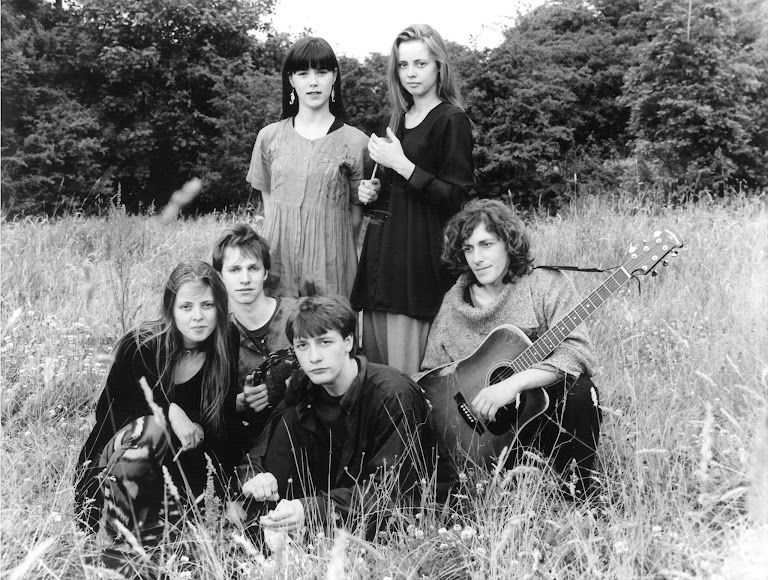
How it resurfaced is a story in itself; In 2022, Zully Adler of LA-based label Goaty Tapes, which specialises in lost music, found a physical copy of a Sea Horses CD in a second-hand record shop in London. He tracked down the founding members and wrote them a speculative letter. That began a four-year restoration, rescuing the music from analogue and remastering and remixing it from the original 2 inch multitrack tape. The band members have since lost touch and a reunion is not planned, which only adds to the mystique.
We sat down with original founding member, Richard Veal, to talk all things about this musical time-capsule and what it means to bring it back…
‘1989 - 1992’ is the first time much of this music has been widely heard. What has the reaction been like?
It has been quite overwhelming to be honest. There have been so many social media posts from record shops around the world who seem genuinely excited to have got their hands on a few copies of the record. As the band were, to all extents and purposes, unknown they have written their own mini-reviews to try to convey what the music is all about. The descriptions have been so inspired and poetic even, I was really touched by the kind things they have been saying.
They often include tracks from the record with their posts and then you get a whole stream of comments from people who are hearing this music for the first time and there is genuine surprise that this is a band that they over looked but are really happy to have now discovered.
The music has been described as timeless and surprisingly contemporary. Why do you think it’s connecting with people now and not at the time?
I think maybe Covid has something to do with it. We all lived through that strange time of captivity and isolation and it changed people in all sorts of ways. Before that, life was kind of relentless and forever accelerating. But, during the pandemic, people had time to stop and think about what they really wanted and to reflect on their own lives and wonder what was important.
We became a bit more contemplative didn’t we, a bit more comfortable with silence and, with that turning inwards, came an appreciation of different types of art, different types of music, music that spoke from the place that we all inhabited.
Lockdown wasn’t difficult for me in that regard because it felt quite natural for me to be like that. Composing music was always a private activity where I’d lock myself away and channel whatever imaginative impulse arose. Reflective music just resonates a lot more now and people are open to receiving it. Back in the days of Madchester and House Music, I think we just got lost in the noise.
How would you describe the Sea Horses sound to someone who has never heard it, without using genre tags?
I’ve spent my whole adult life failing to do exactly that. When you work it out, please let me know!
You’ve said the music is an antidote to an AI-powered future. What do you mean by ‘human’ here?
I think even before AI, music had suffered through the use of too much technology. Everything has sounded just too perfect for years now, all tracks are in perfect time, every riff is edited until it is the perfect take and then it is copied exactly every time it is heard. Every vocal is now perfectly in tune and everything is manipulated so that it sits in its own place in the mix.
But the net result of this is that there is nothing interesting left to listen to – namely the actual human performance of song.
More or less every sound you hear on a Sea Horses record was produced by someone actively doing something - plucking a string, pressing a key, blowing a reed or actually making a sound with their own voice. And each sound was captured using a microphone in a room and recorded onto analogue tape. Half the time we didn’t even play to a click track, just recorded a piece in natural time. It’s all very real and very honest and people just don’t make music that way anymore.
I actually think that is what people are responding to when they hear the record – the flawed humanity of it all because there is something very beautiful in that and maybe we need reminding about it from time to time.
The recording process was free and uninterrupted. How did that shape the sound?
It is true that Mandala Records put almost no restrictions on what we were recording. And Dave Goodman, as a producer, loved to keep the energy flowing in the studio and would actively jump in if he felt that we were losing the creative impetus.
I think that this is why the records still sound so fresh 35 years on. We were always capturing unrepeatable moments on tape that contribute to a very engaging listening experience.
A good example of this can be heard on Asking Heaven and Heart. The drums didn’t exist before we recorded it. At a slight lull in the session, Dave went out to his car and brought in a selection of African percussion instruments. He then handed one to each of us and sat us in a circle. He then conducted us to play by pointing at each of us in turn until we got the feel for the rhythm he was after.
Dave would delight in asking you to play an instrument you’d never even heard of before and record you doing it. These spontaneous performances often made it onto the final mix. I recall playing a bouzouki on Salute to the Sun and a Dulcimer on Beautiful Feeling, neither of which I had any proficiency on but they definitely work when set against the backdrop of the track.
The band didn’t quite fit a scene when the music first came out. How did that feel then, and how does it look now?
I think the truth of the matter is that Sea Horses, as a band, was always out of time. The music we created literally had nothing to do with any of the music scenes that were current in the late 80s and early 90s. I suppose we were aware of it but, at the same time, we never felt compelled to try to change our sound to fit in. We were very committed to that sound even though it was impossible to get any traction as far as radio play was concerned. We really believed in the creative process that we were caught up in and we were fortunate that Mandala Records were totally supportive of that and really believed in it as well.
Richard Veal’s songs draw on madrigals and liturgical music, and the band played in local churches. What drew you to that world?
Whilst I’m not particularly religious, I’ve always loved the natural reverb of churches and they were designed to enhance the sound of voices and in particular choral singing.
Before Sea Horses, Simon and I had spent years playing electronic music in pubs and clubs and always hated the awful sound that came out of the amps and PAs that we had to use.
I think on some level that made us want to create a sound that would work in an acoustic space, something slower but still powerful, something that would be naturally resonant and uplifting but also a bit haunted and unresolved.
Which artists and labels were you listening to at the time? Nick Drake, This Mortal Coil and 4AD are often mentioned.
I think people refer to those artists as, with hindsight, they seem to share a certain aesthetic with what we were doing at the time. The truth is that Simon and I have very eclectic music tastes and I was as likely to be listening to SWANS, Skinny Puppy or Diamanta Gala as I was to This Mortal Coil. I do love Nick Drake now but I didn’t really get into his music until after the Sea Horses albums were made.
How did growing up around Macclesfield and Congleton shape the music?
I’ve said before that Ian Curtis and Joy Division still cast a long shadow over Macclesfield in the early 80s and, as a teenage boy growing up there, I was certainly drawn to his legacy. I think both towns were very liberal at the time and both had several very progressive record shops with the most obscure artists imaginable. I loved my childhood there, a perfect combination of pastoral idyl that gave reign to the dreamer but a train’s ride into Manchester to feel part of the urban edginess of that creative, fascinating city.
What’s the story behind the name Sea Horses?
My father travelled a lot for work and one of the things he brought back from one of his trips was a seahorse set inside a clear glass cube. The glass magnified every detail of its ornate skeleton and I found it both strange and beautiful in equal measure. When I was mulling over possible names for the sound we had just created, I remembered the ornament from my childhood and thought it would work perfectly As this was a time before the internet where you could check things easily, I initially wrote it down incorrectly as 2 words. I then got used to seeing it written down as 2 words and preferred how it looked as a logo which is why I never changed it back again.
Where should a new listener start, and why ‘Dream into Being’?
I think the track ‘Dream into Being’ is an excellent place to start listening to Sea Horses. It’s probably the closest thing we ever got to recording a ‘single’ in that it actually has a chorus (albeit with different words each time). Musically it is quite strange (as a lot of out tracks were) but the melody will stay in your head all day if you let it and the girls’ vocals are just beautiful.
The theme was inspired by a short story by Jorge Luis Borges called ‘The Circular Ruins’ where a man spends years painstakingly dreaming another life into existence. The only difference between the dreamed man and other men is that he is impervious to fire. One day there is a fire at the circular ruins where the dreamer cast his spells. As the flames lick against his body he is horrified to learn that he too is impervious to fire and therefore that he too was dreamt into life by another.
Having been out of reach for so long, what does it mean to have the music back on vinyl?
I really can’t say how grateful I am that Zully took it upon himself to put out this retrospective. The music really was at risk of becoming lost to the annuls of time and none of this would have happened if he hadn’t kept encouraging us to remaster the tracks.
I am absolutely delighted that people are discovering and enjoying the music all over again. As a musician, this is what you dream about and it really is amazing that something we did 35 years ago is being received so positively now.


Comments